What to cook? Start with a shortlist
Three possible meals, a little input from everyone, and a decision you can actually cook from.
By The Scullery team · Written
Updated
Choosing dinner together is easier when there are a few actual meals to consider. Start with three possibilities that fit the evening, hear what sounds good, and choose one. Three is a useful starting point; a couple of options may be plenty.
Check what fits tonight
Before looking for recipes, agree on the practical things. Who is eating? Who can cook? Is someone stopping at the shop? Which ingredients do you want to use?
Be specific about what feels manageable. “I can cook something familiar” gives everyone a starting point. So does “I'd like to use the greens.” The person cooking should have a say in how much preparation they take on.
Keep these answers in mind when picking the options. A recipe can look appealing and still belong on another evening's list.
Bring a few possibilities
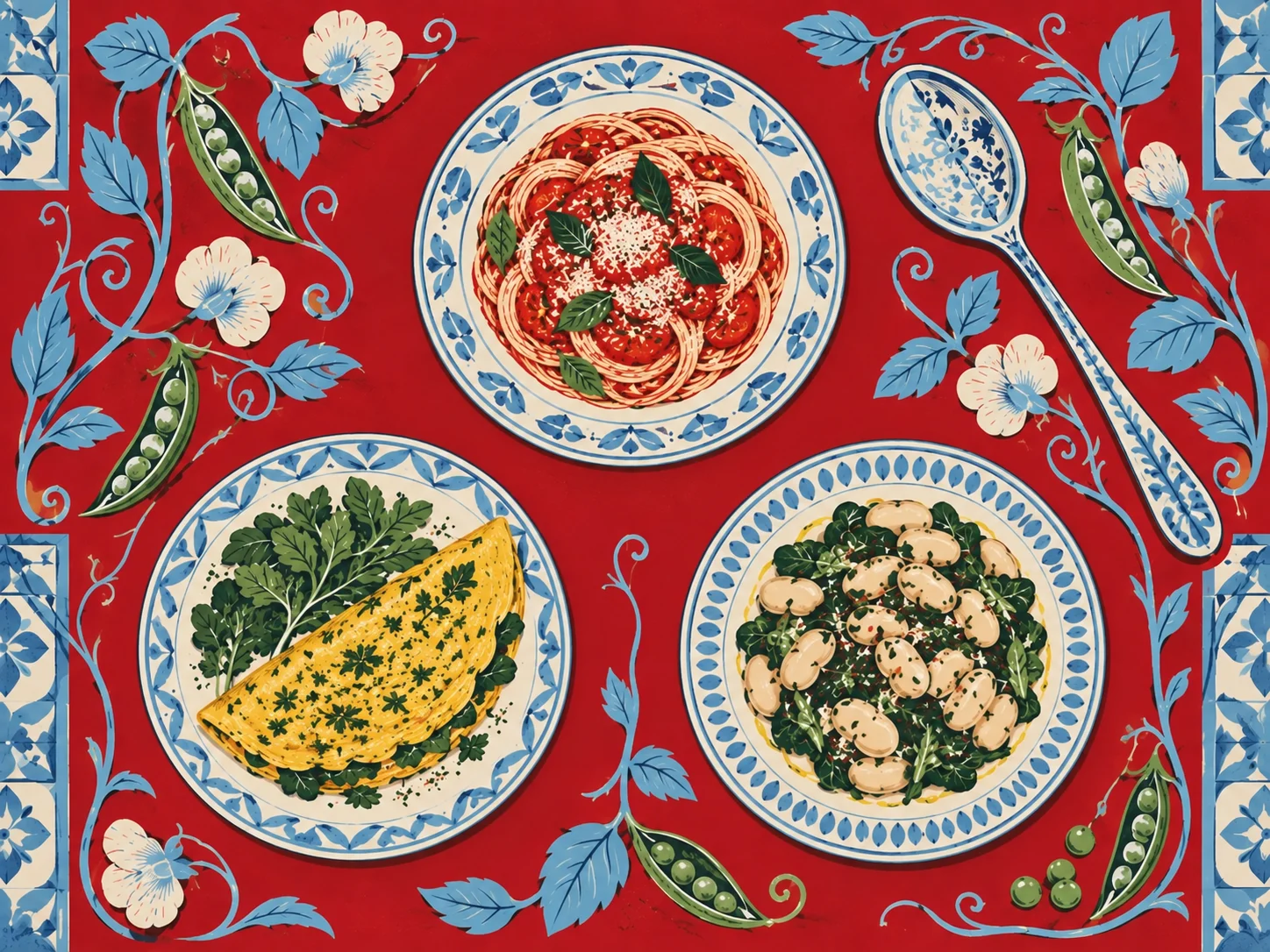
Suppose you have eggs, a tin of beans and some greens. You could suggest:
- A herb omelette, using a recipe you already know.
- Beans with greens, with bread alongside.
- Tomato pasta, if someone can pick up what is missing.
Check the full recipes before settling on the list. Look at the ingredients, quantities and preparation involved, especially for something you haven't cooked before.
Include a familiar favourite if that helps. A shortlist doesn't need to introduce three new dishes, and everyone doesn't need to contribute the same number of suggestions. Its job is to make the conversation easier.
Hear the preferences, then choose
Ask which options sound good. If someone rules one out, a reason helps: perhaps they had it for lunch, or would prefer something else today.
In Scullery, household members can add recipes to a shared shortlist and mark the ones they like. Those preferences help you narrow the choices. Someone then explicitly selects the meal, so everyone can see what has been decided.
Once you've chosen, check the ingredients you have and add anything missing to the shopping list. Include the small things too: the bread for the beans, or the herbs for the omelette.
If several options still appeal, keep them for later. They can become the beginnings of a flexible meal plan.