Weekly meal planning for beginners
A small first plan that helps you shop and choose what to cook without filling every day on a calendar.
By The Scullery team · Written
Updated
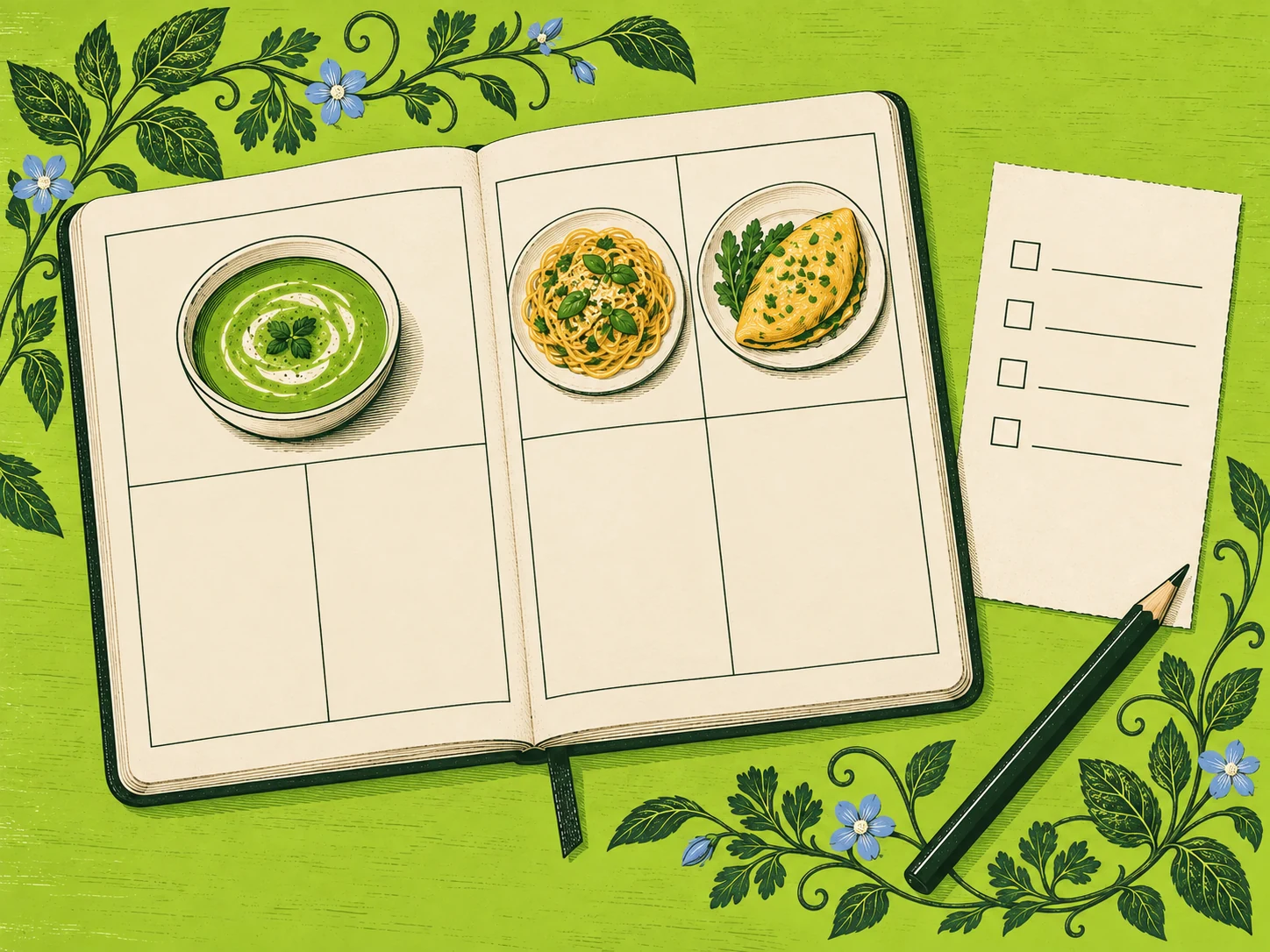
Start weekly meal planning with three meals you expect to cook, a check of the ingredients you already have and one shopping list. Leave the other meals flexible. This gives you something useful to shop for without asking you to predict every appetite and change of plan.
Work out which meals need a plan
Look at the week before opening a recipe collection. Note when people will be home, who might cook and which evenings are already busy. Choose the meals where having an answer in advance would help most.
There is no requirement to plan breakfast, lunch and dinner at once. If breakfast is usually toast and lunch is already covered, account for their ingredients without turning them into separate projects. Include ordinary meals that don't need a written recipe.
Ask anyone sharing the cooking what they would like. Two people naming one meal each can be enough to start. One person shouldn't have to guess everyone else's preferences from a blank calendar.
Pick a manageable first three
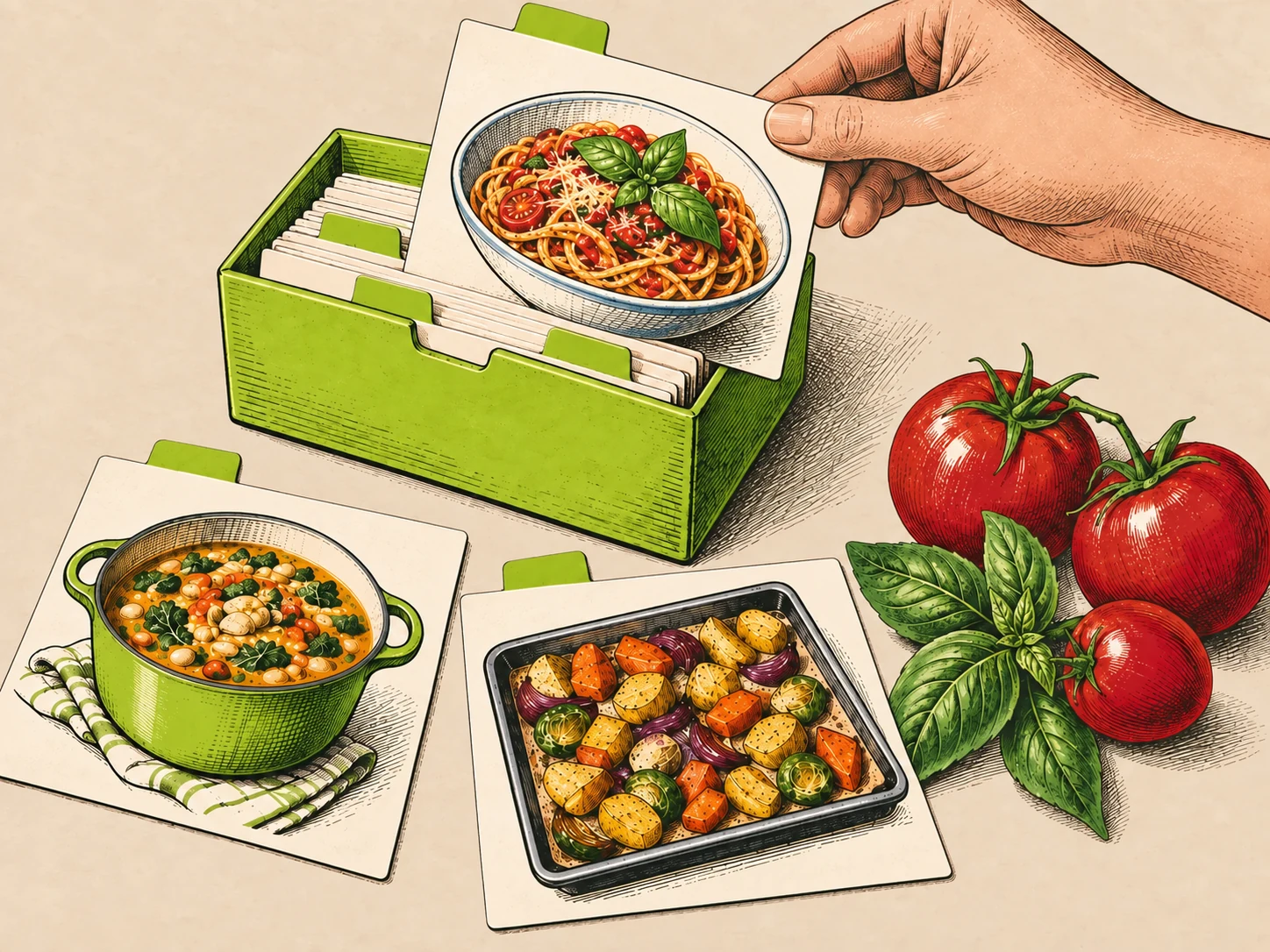
For example, your first plan might be tomato pasta, a vegetable traybake and bean tacos. Keep at least one meal familiar, and choose only as much new cooking as you want to take on.
Write a fallback beside the plan, such as an omelette or something already in the freezer. Check that you have what it needs. A fallback is most useful when it doesn't create another shopping trip.
You can assign dates where they help, or keep a short list of meals to choose from. Scullery supports both loose selections and meals arranged by day. The planning format should suit your week.
Build the list and check the kitchen
Read each chosen recipe at the servings you intend to make. Put its ingredients on one list, then check actual amounts in the cupboard and fridge. A jar being present doesn't mean there's enough left for the recipe.
Add breakfast supplies, snacks and household items before shopping. If someone else will buy an item, include useful details such as tin size or the type of milk.
In Scullery, ingredients can be added from recipes or a plan and remain linked to the meals that need them. Review possible overlaps before combining quantities.
Adjust the plan after the first week
Notice which meal was easy to make and which never happened. Next week, keep what helped and reduce whatever felt like too much. Moving a meal is an ordinary part of planning.
Once this small routine works, use your saved recipe collection to make the next choice easier. More planned meals are useful only if they help your household.