How to digitise family recipes and keep their character
Keep a faithful copy of the original and a separate version that's clear enough to cook from.
By The Scullery team · Written
Updated
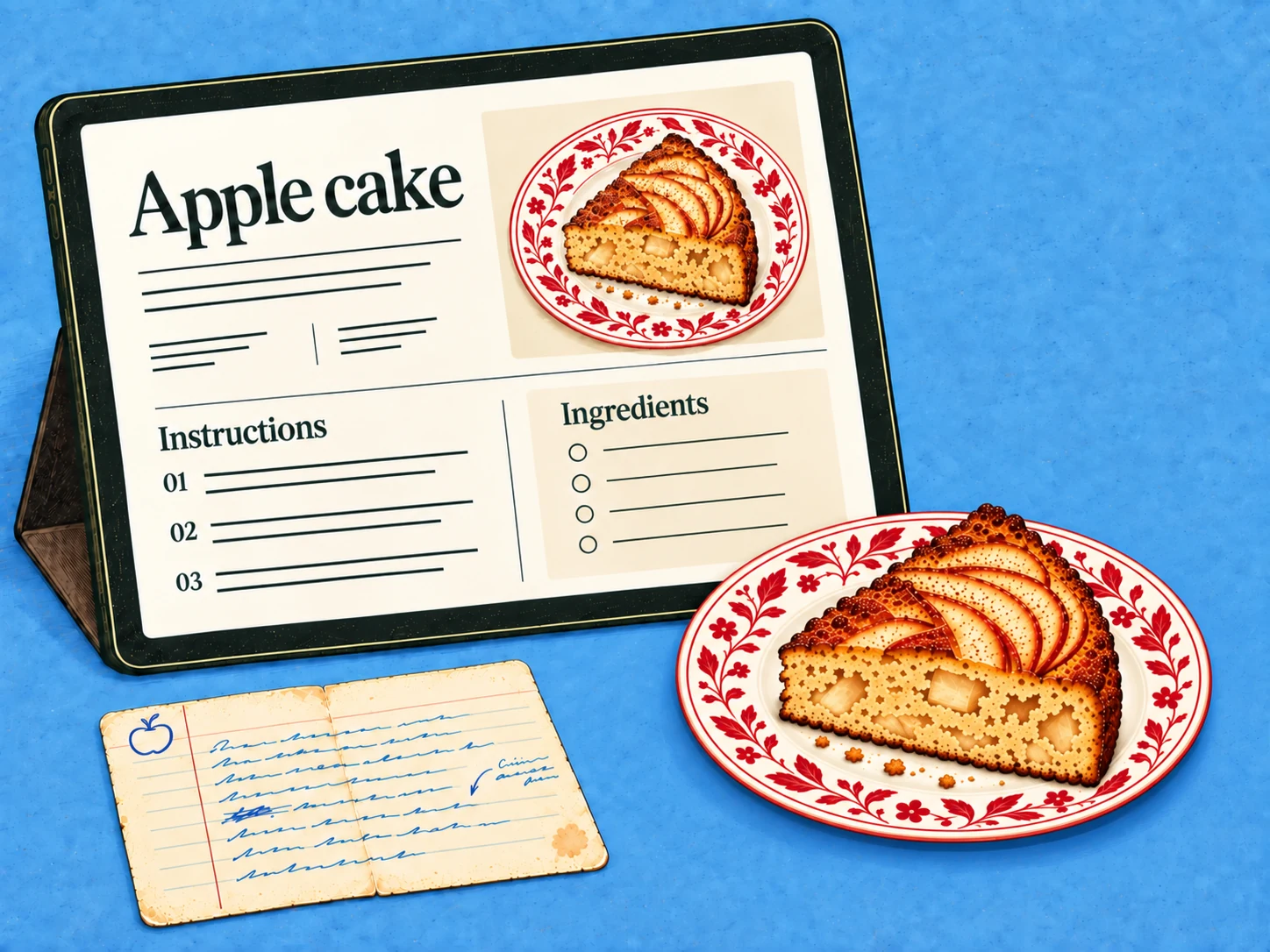
Digitising a family recipe works best when you keep both the original and a readable cooking version. The photograph preserves the handwriting, crossed-out quantities and little annotations. The typed recipe makes it easier to find the dish, check what you need and share the method with someone else.
Photograph the whole recipe
Start with a few cards that someone wants to cook soon. Place each on a flat surface in even light, hold the camera square to the page and check that the smallest writing is readable. Photograph the back if there are more instructions there.
Keep an uncropped original. You can make a tighter copy for reading without losing a name or note at the edge. If a recipe crosses several pages, keep the images in order and include the book title and page number in your notes.
Give the image files recognisable names, such as “Aunt Jo apple cake front”. Keep a second copy somewhere separate from your phone. A recipe app is useful for cooking, but the original images deserve their own place in the family archive.
Transcribe without guessing
Type the recipe or use a scanning tool, then compare the result with the original line by line. In Scullery, readable recipe photos can become a draft for review. Pay particular attention to fractions, oven temperatures, abbreviated units and ingredients written in the margin.
Suppose a card says “one tin” without a size. Leave a visible question in your notes and ask a relative who knows the recipe. Don't quietly replace it with a modern tin size and present that as the original instruction.
Keep the original wording when it carries meaning. You can add a separate explanation beside “bake until it looks right” once someone has clarified what to look for.
Add the context a new cook would need
Record who the recipe came from, which pan they used and any changes your household makes. Distinguish family recollection from something you've checked by cooking it.
If the person who knows the recipe is available, ask them to read your version before you share it. A short conversation about “a cup” or “a hot oven” can be more useful than another round of automatic text recognition.
In Scullery, choose Recipes for a keeper or To try for a recipe you want to explore. Missing details can stay in a saved draft while you work them out.
Make the first copy useful
Share the readable version alongside the original image with the people who will use it. Ask whether they can follow it without further explanation, then correct the unclear parts together.
When those first cards are ready, organise the collection around useful names. Add the next few recipes at a pace that lets you check them properly.