How to save recipes from websites for later
Save a web recipe in a form you can find again, with its ingredients, instructions and original source together.
By The Scullery team · Written
Updated
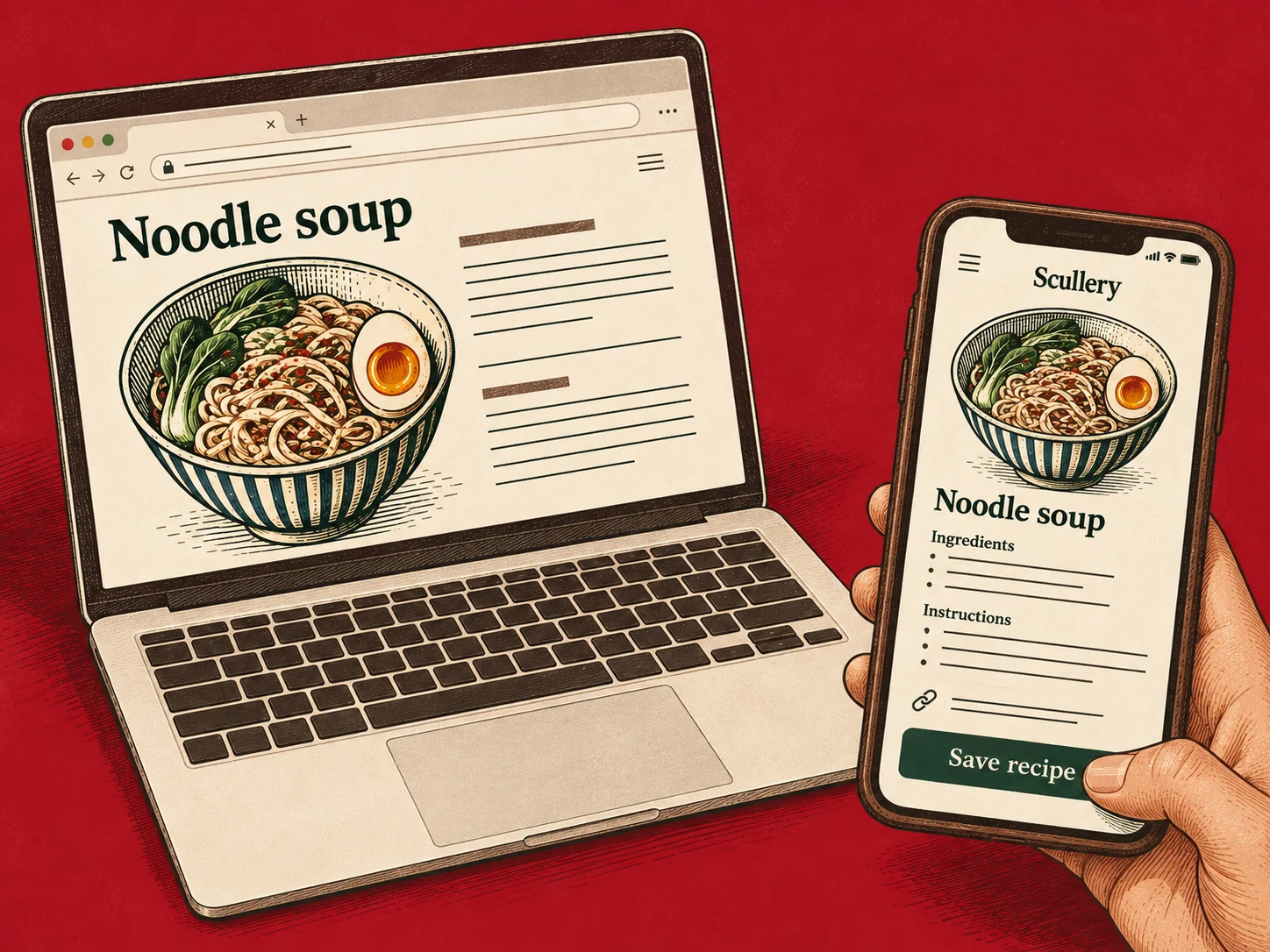
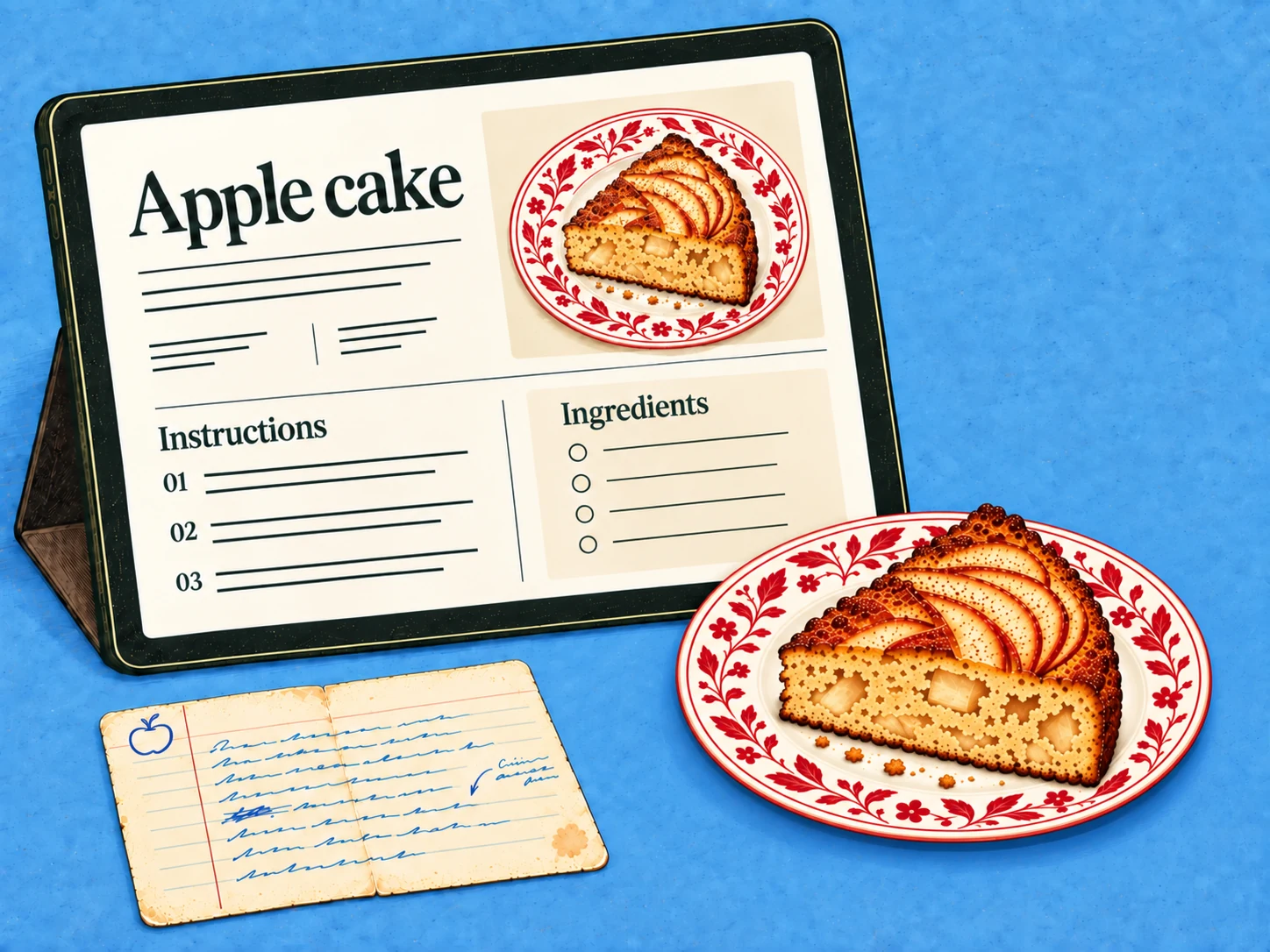
You can save a recipe from a website as a bookmark, a printable copy or an entry in a recipe organiser. The right choice depends on whether you want to revisit the page, read it away from the website or use its ingredients for planning and shopping.
Choose what you want to keep
A bookmark is enough when you want to return to the author. Give it a useful name and a folder you can remember. It points to the page rather than keeping a separate copy of the recipe, so check other options for something you would hate to lose.
A printable copy or PDF can suit occasional cooking. If the site offers a recipe print view, check the preview before saving: ingredients, quantities, servings and every method step should be present. Add the source address if the printout omits it.
A recipe organiser is useful when you want to search a collection, adjust servings or bring ingredients into a shopping list. Scullery, Paprika and Recipe Keeper offer ways to import web recipes. Choose one based on the routine you want after saving.
Save the parts you'll need at the worktop
Check the title, yield, ingredients, method and important recipe notes. Separate sauce or topping sections matter; a page can contain more than one ingredient list.
Imagine saving a roast vegetable recipe that includes a yoghurt dressing. If you keep only the traybake ingredients, your shopping list won't include what the dressing needs. Compare your saved copy with the full recipe before closing the source.
Keep the author's name and original link. Their photographs, substitutions and explanation may help later even when you prefer cooking from a shorter view. Return to that source if a quantity looks odd.
Put the save somewhere you'll look
In Scullery, use Save recipe for something you want to keep in Recipes, or Save to try for a recipe you'd like to explore. Use Save idea, where offered, for source material you want to hold onto as an Idea.
A saved draft can still need work. Missing details are a reason to check the source before cooking, not a reason to invent them. A picture of the finished dish is useful context, but it doesn't reveal the author's exact quantities.
Check one recipe before moving the rest
Open your saved recipe on the device you'll use in the kitchen. Make sure you can read the steps, find the source and recognise the recipe later by its title.
If you choose an organiser, check the imported draft before you rely on it. Start with the next recipe you intend to cook; there's no need to migrate every bookmark first.